
How Our Food System Was Built — and Why Soil Health Was Left Behind
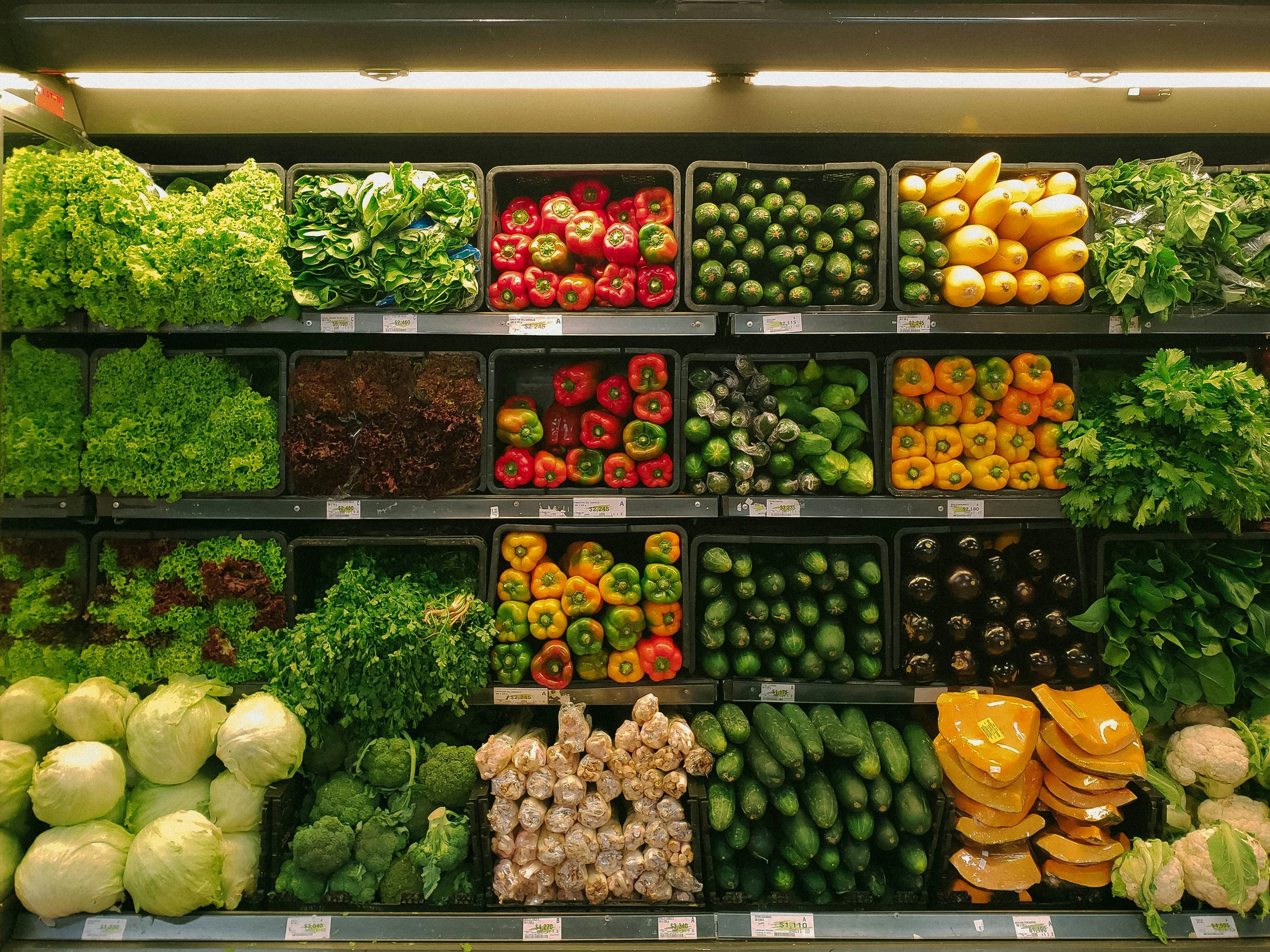
Supermarket shelves are full. Food looks abundant, affordable, and endlessly available. Yet beneath that abundance sits a quieter question: if we’re producing more food than ever, why are our soils so depleted?
To explore that question, we sat down with David Forrest — farmer, educator, and Vice Chair of SoilCare — to understand how modern agriculture came to look the way it does, and what’s been left behind in the process.
David’s perspective challenges a common assumption — that our food system is broken. Instead, he argues it’s doing exactly what it was designed to do.
“The food system isn’t broken. It’s doing exactly what it was designed to do.”
The Abundance Illusion
Walk into any supermarket and you’ll see it. Full shelves. Perfect produce. Endless choice.
From the outside, we see success.
But according to Forrest, that surface-level abundance hides a deeper truth: a system optimised for yield, shelf life, and profit — not nourishment, resilience, or long-term soil health.
“The soil’s just there to hold the plant up,” David says.
“We give it everything it needs through chemistry, and if something tries to live on it, we kill it with more chemistry.”
It’s a model borrowed from the factory floor — efficient, extractive, and linear. And over time, it’s become the dominant logic of global agriculture.
The result? Food that looks the part. Travels well. Lasts longer. But often carries less nutrition, less flavour, and far greater environmental cost.
The Industrial Logic Behind Our Food
Industrial agriculture treats soil as a medium, not a living system.
Synthetic fertilisers replace the slow work of microbes. Pesticides, fungicides, and herbicides manage imbalance rather than prevent it. Every season becomes another cycle of dependency — more inputs, more costs, less life.
“Globally we’re producing 40% more energy and protein than we need,” David explains.
“Yet a billion people still go hungry, and millions more are nutrient-deficient.
Food may be cheaper at the checkout. But the real costs haven’t disappeared.
They’ve shifted — into degraded ecosystems, struggling farms, and rising healthcare bills.
The Quiet Trade-Off: Health
Here’s where the conversation gets personal.
Nutrient levels in fresh food have declined steadily over the last 50 years — especially trace minerals and antioxidants that quietly support human health.
Food can still grow. Calories still stack up. But nourishment begins to thin out.
Meanwhile, the “perfect” appearance demanded by retailers drives around a third of chemical use purely for cosmetic reasons.
The irony? We’re surrounded by food that fills us, but rarely sustains us.
The industrial model isn’t designed for wellness — it’s designed for efficiency. And efficiency, in isolation, has a price.
“We’ve lost soil health, environmental health, and human health — all at once,” David says.
Not Broken, But Built This Way
Forrest’s view is quietly radical because it asks us to look past quick fixes and into the blueprint itself.
Modern agriculture did what it set out to do.
It delivered scale, consistency, and convenience.
But in chasing output, we lost something harder to measure: Living soil. Resilient systems. Food that truly feeds.
And soil, it turns out, isn’t just dirt. It’s one of the planet’s great life-support systems — a carbon sink, a water filter, a foundation for ecosystems above and below ground. When it degrades, the consequences ripple outward — into climate, biodiversity, and our own bodies.
The good news?
Soil isn’t gone. It’s waiting.
Soil isn’t gone. It hasn’t failed. And it isn’t beyond repair.
Across farms already doing things differently, the pattern is clear: keep living roots in the ground, ease off the chemical load, feed the biology — and systems recover. Nutrients start moving again. Plants get stronger. Inputs fall. Resilience returns.
This matters because the condition of our soil determines what ends up in our crops, in our bodies, and ultimately our communities. When soil health declines, the costs don’t vanish. They surface elsewhere — in ecosystems, in health, and in long-term resilience.
This piece names the problem: a food system that looks abundant, but runs on exhausted soil.
This article is part of The Farm’s Soil Health series — an ongoing conversation with farmer and educator David Forrest exploring how soil health, human health, and climate are deeply connected.